
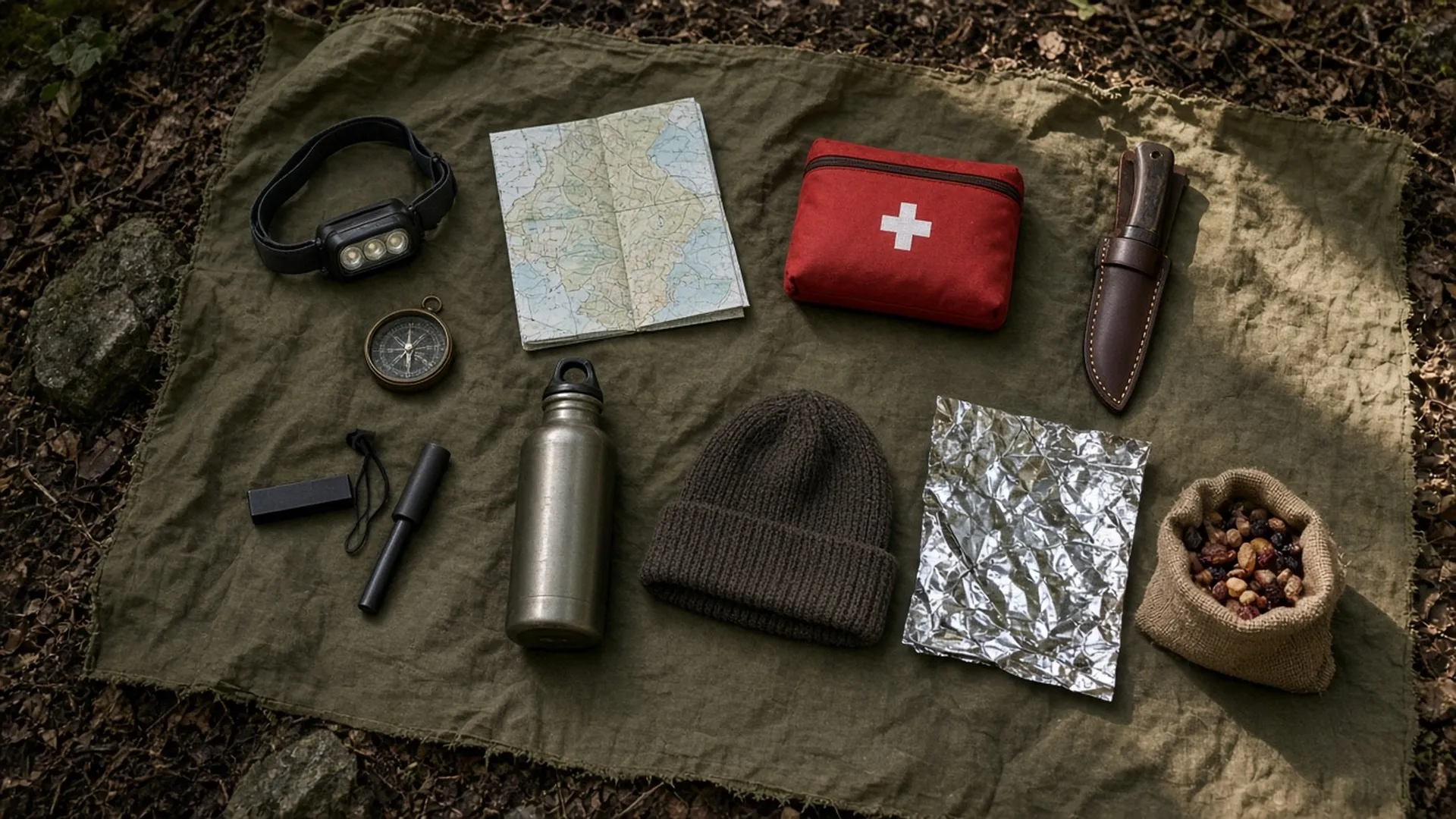
What to pack for a hunt
The Ten Essentials, applied to a day afield.
Disclosure: We may earn a commission if you buy through links on this page. It does not change what we recommend. Affiliate Disclosure
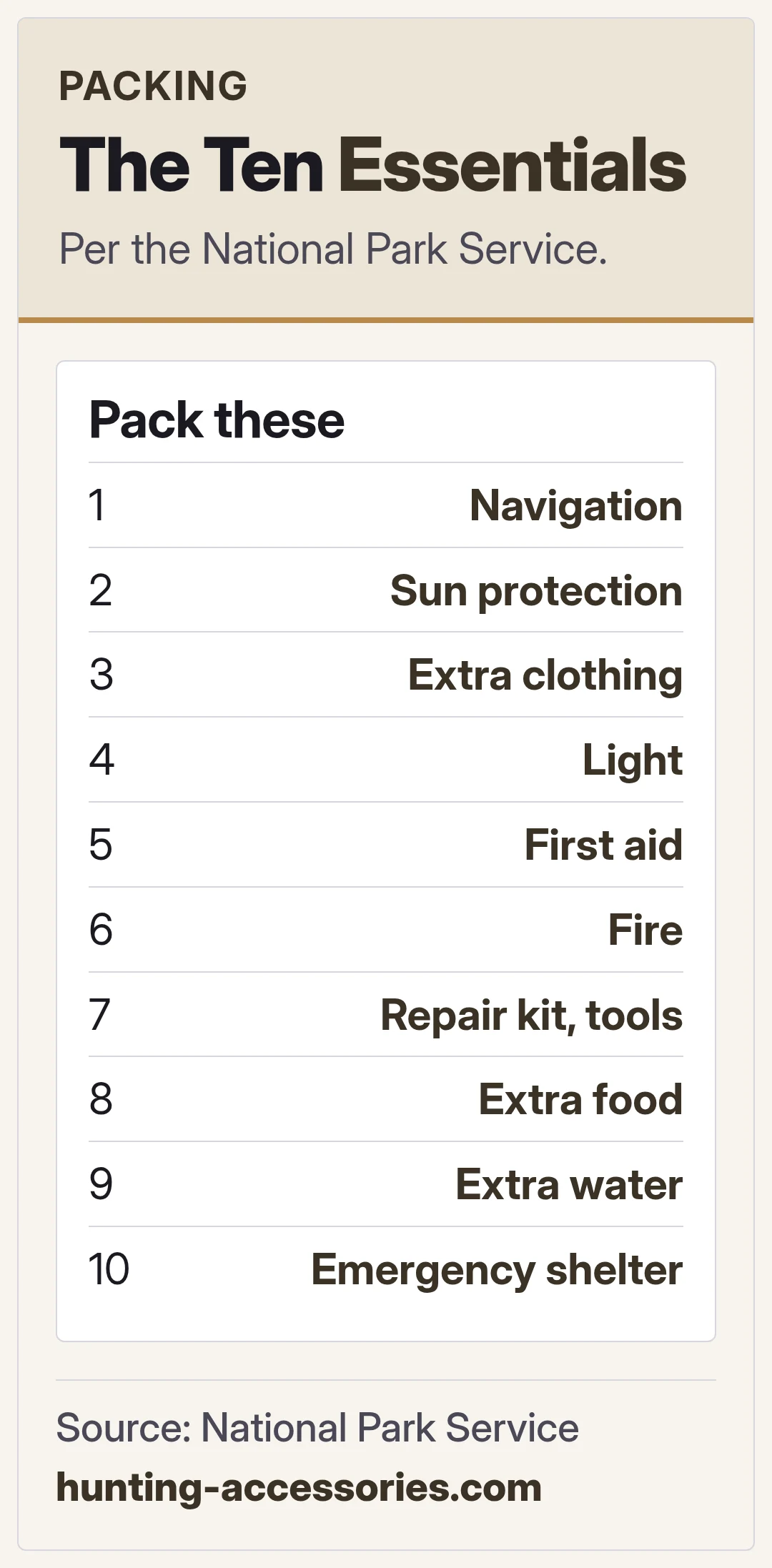
The Ten Essentials
The National Park Service lists ten: navigation, sun protection, extra clothing, illumination, first-aid supplies, fire, a repair kit and tools, extra food, extra water, and emergency shelter.
A hunter's survival kit
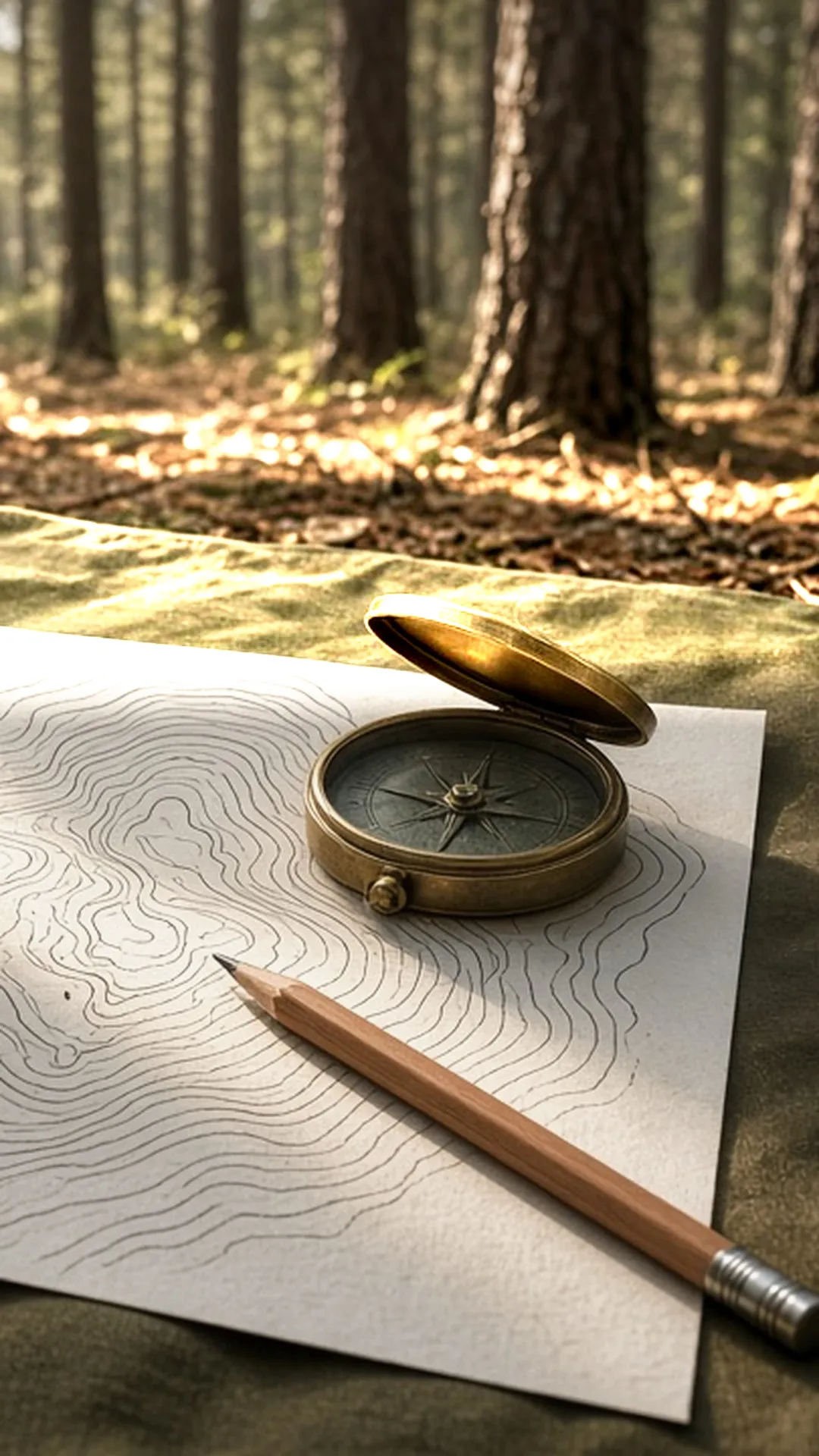
IHEA-USA hunter education standards say every survival kit should include a fire building device, a way to get safe drinking water, a personal first aid kit, a signaling device, material for shelter, a map and compass, and emergency food.
Light and signals
The Park Service says headlamps are the recommended light source because they are hands-free, and to pack extra batteries. The Treestand Manufacturers Association lists a cell phone, two-way radio, whistle, and flashlight among emergency signal devices to keep within reach.
Tell someone your plan
The Park Service and the Treestand Manufacturers Association both say to tell someone where you are going and when to expect you back.
FAQ
General information only. Hunting laws, seasons, licenses, and hunter orange rules are set by each state; check your state wildlife agency's current regulations before you hunt, and take the hunter education course your state offers. If you hunt from a tree stand, wear a full-body fall arrest harness system every time you leave the ground, including while climbing up and down, follow the Treestand Manufacturers Association's Treestand Safety Guidelines and the maker's instructions, and have a plan for rescue. Tell someone where you will be and when you will return. In an emergency, call 911.
Next: first aid kit
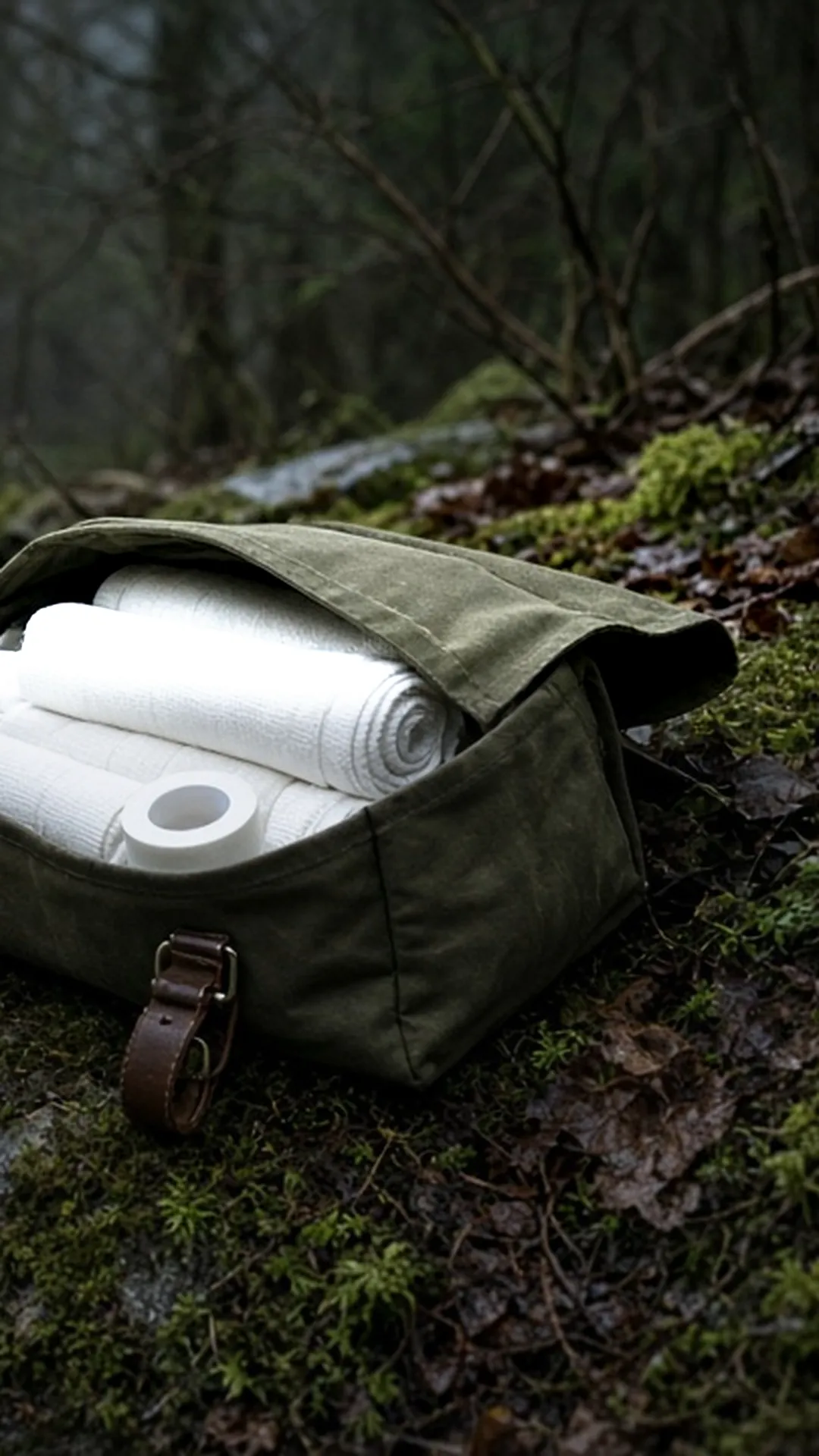
Start from a standard list.
